@lab

@ Tongji University · Shanghai Research Institute for Intelligent Autonomous Systems
Shanghai Research Institute for Intelligent Autonomous Systems | Tongji University
Related links → Tongji University Intelligent Robotics and Computational Perception Laboratory · Waseda Language Intelligence Laboratory
What We Study
@lab studies the dynamics, complexity, and semantic compression of foundation models and agents. Our technical framework combines state-space geometry, phase transitions and criticality, information bottlenecks, and generative distributions.
We seek measurable order parameters and distortion functions, then use them in training diagnostics, generation monitoring, agent control, document clustering, and knowledge retrieval.
Research
Five directions share one question: how can macroscopic structure be identified, represented, and controlled from local probabilities, finite states, and heterogeneous observations?
Research Topics
-
Agent Dynamics
state space · mode collapse · early warning · closed-loop control
ICML 2026 -
Foundation Models and Complexity
fractal geometry · statistical manifolds · long-range dependence · degeneration
NeurIPS 2025 · Physical Review Research 2024 -
Semantic Compression and Clustering
information bottlenecks · rate–distortion · generative clustering · knowledge indexing
ICML 2024 Oral · AAAI 2025 -
Nonlinear Semantics and Linear Language Models
semantic fields · polysemy · state-space models · finite-state memory
NeurIPS 2022 -
Semantic Models of Complex Financial Markets
stock representations · event semantics · portfolio optimization · tail risk
ACL 2020 · Knowledge-Based Systems 2022
Prospective Students
2027 Master’s Intake
Applications are welcome from prospective master’s students interested in foundation models and agents, complex systems, semantic compression, or semantic models of financial markets.
2027 PhD Intake
Prospective doctoral students, including direct-entry applicants, may work on questions such as:
- Why do agents become unstable, and how can they operate reliably over long horizons?
- How can macroscopic complexity and emergent structure in large language models be measured?
- How do models compress knowledge while retaining task-relevant information under finite capacity?
Research Activities
- model long-term states, instability mechanisms, and critical transitions in foundation models and agents
- develop online diagnostics, state regulation, and training methods for generative processes
- study information compression, generative clustering, knowledge indexing, and retrieval
- pursue foundational work across AI, complex systems, and information theory
Preparation
- sustained interest in foundational questions in large models or AI
- background in linear algebra, probability, or optimization
- programming experience with Python or PyTorch
- willingness to undertake long-term research
Research Internships
- third-year undergraduate students or above; applicants based in Shanghai are preferred
- interest in foundation models or agent systems
- availability of at least two days per week
- remote or on-site work at Tongji’s Zhangjiang campus
Research Environment
- research-project support and student stipends
- Tongji University GPU computing platform
- research offices and accommodation at the Zhangjiang campus
How to Apply
Please send the following materials to duxin@tongji.edu.cn:
- curriculum vitae
- academic transcript
- brief statement of research interests (optional)
Shanghai Research Institute for Intelligent Autonomous Systems

The institute was established by the Ministry of Education at Tongji University. Its research platforms include:
- the National Key Laboratory of Autonomous Intelligent Unmanned Systems
- an NSFC Basic Science Center
- a Ministry of Education Frontiers Science Center
- the National AI Industry–Education Integration Innovation Platform
Discipline and Training
- among China’s first doctoral programs in the interdisciplinary field of Intelligent Science and Technology
- interdisciplinary training across AI, complex systems, and engineering systems
Zhangjiang Research Campus
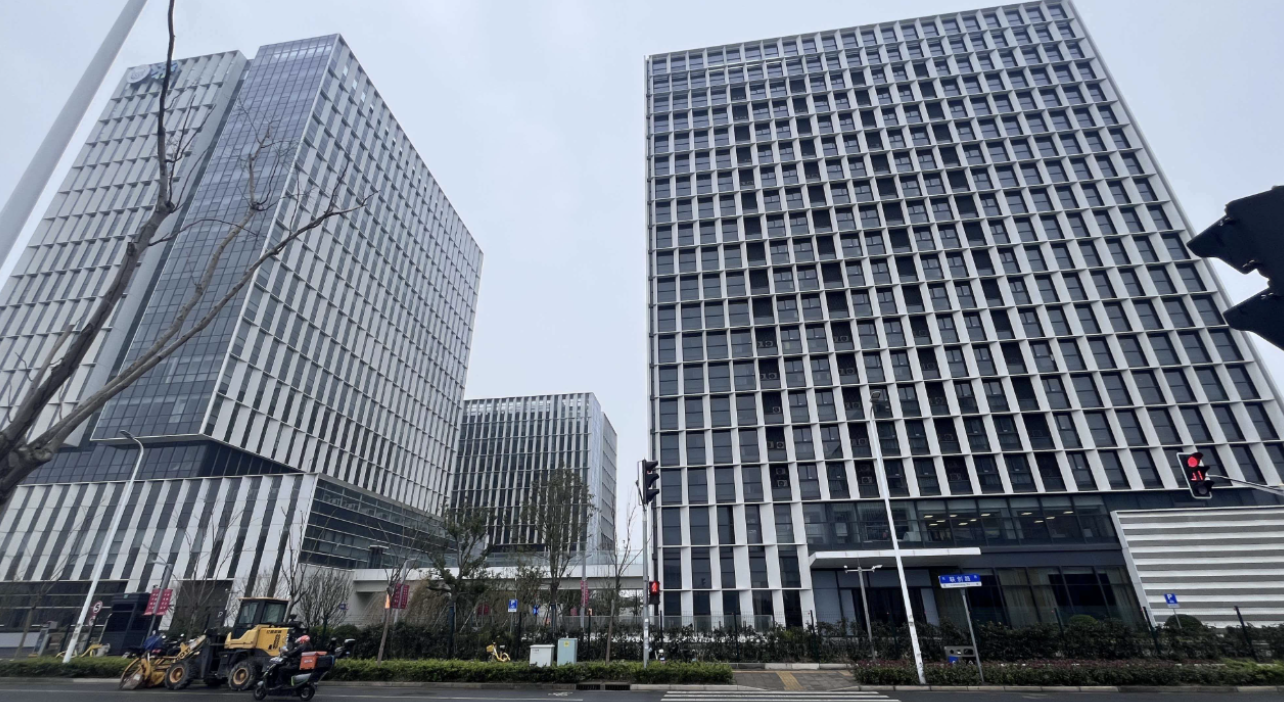
The campus covers 43 mu, with a total floor area of 127,500 square metres.
Computing Infrastructure
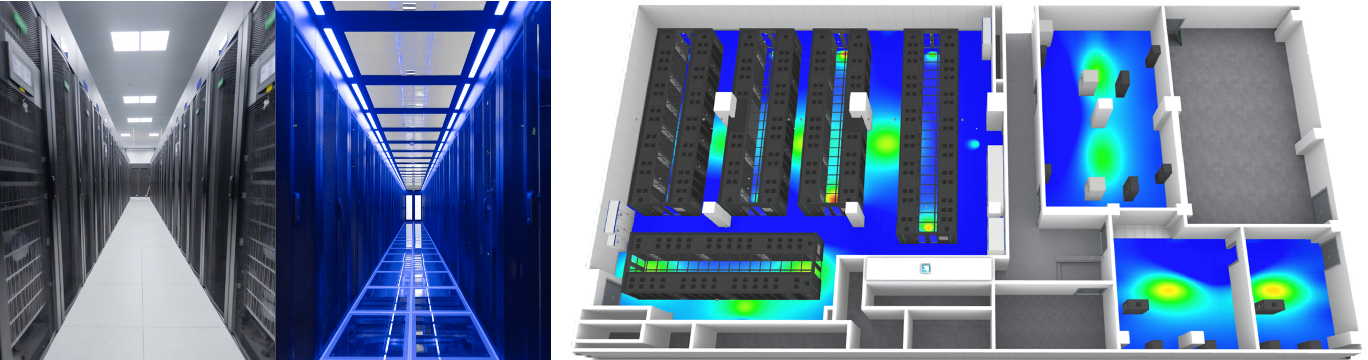
The large-scale GPU computing centre became operational in 2025 and includes more than 20 NVIDIA DGX systems and an agent-computing platform.